
Crew ops · Blog
Hiring Fence Installers: Job Posts, Ride-Alongs, and the First Two Weeks
Most hiring advice is written for offices. This one is for the yard: what to put in a fence installer job post, how to run a fair paid ride-along, and a two-week plan that keeps new hires safe and shows early who will stick.

Why hiring breaks fence shops
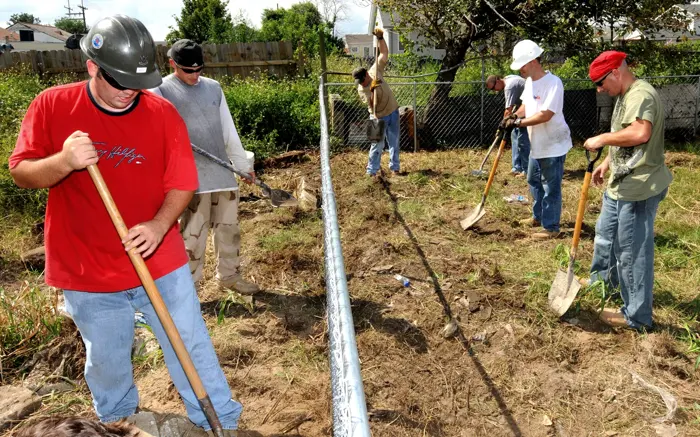
A fence company can sell more work than it can build. The limit is usually people: crews who show up, dig to depth, and leave a yard clean. Most hiring advice online is written for offices. This guide is for the yard and the truck: what to put in the job post, how to run a fair ride-along, and what the first two weeks should look like so a good hire stays and a bad fit shows early.
There is no separate federal outlook page for fence installers, so the closest public reference is the Bureau of Labor Statistics profile for construction laborers and helpers. It says these workers typically learn on the job, often by shadowing experienced workers, that employers often want OSHA-aligned safety training before or after hire, and that a valid driver's license may be required. It also projects about 137,000 openings a year for that group over 2025 to 2035, many from people leaving the trade. Translation: you are competing for the same people as every other trade, so the shop with a clear plan wins.
Write a job post a fence hand will actually read
Skip the buzzwords. Say what the day is like, what it pays, and what you will teach. A post that hides the work gets people who quit on day two.
| Section | What to write | What to leave out |
|---|---|---|
| Title | Fence Installer (will train) or Fence Crew Helper, plus the town | Rockstar, ninja, or a vague Laborer |
| Pay | Your real starting hourly range and when it goes up | Competitive pay with no number |
| The work | Digging post holes, setting posts in concrete, building wood, vinyl, chain link, or aluminum fence, hanging gates, loading trucks | A list of every tool you own |
| Conditions | Outdoors in heat and cold, heavy lifting, early starts, drive time to jobs | Promises you cannot keep about hours |
| Requirements | Show up on time, pass a driver's license check if they will drive, steel-toe boots | Degrees or certificates nobody in your crew has |
| Training | Who they ride with, what they learn in the first two weeks, how they move up | Nothing. This is the part that gets callbacks |
| How to apply | A phone number that gets answered or a short form | A long application for a helper job |
Post where installers look: local job boards, referrals from your current crew, trade and technical school programs, and your state employment service. The BLS profile also points people to state apprenticeship agencies and Apprenticeship.gov, which is worth a look if you want a formal training path.
A ten-minute phone screen
You are not hiring a resume. You are checking three things: will they show up, can they do physical work outdoors, and can they get to the yard. Ask the same questions of everyone and write the answers down.
- How would you get to the yard by our start time every day?
- Tell me about the last job where you worked outside all day. What was the hardest part?
- Have you run a post hole auger, a skid steer, or a concrete mixer? Which ones?
- Do you have a valid driver's license? Any reason you could not drive a company truck?
- What days or times can you not work?
- If you saw paint marks or flags in a yard where we were about to dig, what would you do?
The last question is not a trick. Locate marks matter more than any skill you can teach later. Anyone who says they would just dig around them needs the talk on day one.
Run a paid ride-along, not a free tryout
The best interview for a fence hand is half a day on a real job. Put the candidate with your steadiest crew lead, not your fastest. Give them carrying, staging, cleanup, and a shovel, and keep them away from the auger and saws until they are trained.
Pay for it. The Department of Labor's Fact Sheet #22 on hours worked says that work an employer suffers or permits is work time that must be paid, whatever the reason. A trial day of real work counts. Run it through payroll like any other hire, and check your state's rules and your workers' comp carrier before anyone sets foot on a job.
What the crew lead watches: on time, phone away, asks before touching tools, keeps working when it gets boring, and treats the homeowner's yard like it matters. Have the crew lead write three lines at the end of the day. Decide within a day or two; good people take other offers.
Day one paperwork and gear
- Form I-9. USCIS says every employer must complete and keep a Form I-9 for each person hired to work for pay. The employee fills out Section 1; the employer reviews documents and completes Section 2.
- Payroll and tax forms. Federal and state withholding forms and any state new-hire report. Your payroll provider or accountant handles the details for your state.
- Driving. If they will drive a company truck or tow a trailer, check the license and your insurance carrier's rules first.
- Gear. Gloves, eye protection, hearing protection for auger and saw work, and a clear rule about boots. Fit it on day one, not after a week.
- Who to call. The crew lead's number and what to do if someone gets hurt, written down and in their phone.
The first two weeks
New hires quit or get hurt early. OSHA's training guidance says workers should learn the hazards of their own job, how to report injuries and close calls, and when and how to wear protective equipment, in a language and at a reading level they understand. It also says on-the-job training, peer-to-peer training, and job site demonstrations can work as well as a classroom. That is how fence crews already teach. Just make it a plan instead of luck.
| When | What the new hire does | What the crew lead checks |
|---|---|---|
| Day 1 (morning) | Paperwork, PPE handed out and fitted, truck and trailer walk-around, who to call if hurt | Boots, gloves, eye and ear protection on before any tool runs |
| Day 1 (afternoon) | Carry, stage, and clean up on a live job. Watch the line get pulled and posts laid out | Is the new hire asking questions? Do they stay out of the auger's swing? |
| Days 2 to 3 | Dig and set with a partner. Mix and pour concrete. Learn the locate marks and the ticket on the job folder | Holes to depth and in line. Never digging outside the marked area |
| Days 4 to 5 | Hang rails, pickets, or panels with a partner. Basic layout with string and tape | Plumb and level checks. Clean cuts. Tools put back |
| Week 2 | Repeat on a different fence type (for example wood after vinyl). Help set and hang one gate | Can they explain why a gate post gets more concrete? Do they call out hazards? |
| End of week 2 | Sit-down with the crew lead and owner: what was hard, what they want to learn next | Keep, extend training, or part ways. Write it down |
For the first week itself, the day-by-day version with a printable sign-off card for the crew lead is on AI Fence Pros: the new fence installer first-week checklist (safety and gear, tools and the auger, locate marks and layout, posts and gates, closeout).
If it is hot out, ramp up the hours
OSHA's heat guidance for new workers is blunt: it reports that almost half of heat-related deaths happen on a worker's first day and over 70 percent in the first week. OSHA and NIOSH recommend the rule of 20 percent: on day one a new worker spends only 20 percent of the normal time in the heat, then adds 20 percent each day. On an 8-hour day that is no more than 1 hour 40 minutes of hot work on day one. OSHA also says to give new workers more breaks, use a buddy system, never let them work alone, and keep the extra care for 1 to 2 weeks. On a fence crew that means the new hire digs in the morning and stages material in the shade after lunch, not the other way around.
A new hire who pushes hard to prove themselves is the one to watch. OSHA calls this out directly: new workers may skip breaks and ignore symptoms because they do not want to look lazy. Your crew lead sets the tone by taking the water break first.
Fence-specific things to teach early
- Locate marks and the ticket. What the paint colors and flags mean, where the ticket number lives on the job, and that nobody digs outside the marked area. See the 811 locate checklist on Pros.
- Auger safety. Who runs it, where everyone else stands, and what to do when it binds on a root or rock.
- Layout. Pulling a string line, measuring post spacing from the plan, and checking against the drawing before the first hole.
- Concrete. How your shop sets posts, how deep, and why gate posts get extra.
- Closeout. Cleanup, spoils, photos of the finished run and gates, and walking the customer's yard before the truck leaves.
Where AI helps (and where it does not)
A chat assistant is useful for the writing that falls on the owner at night: a job post, a phone-screen sheet, a two-week plan, and a draft translation of a safety talk. It is not a hiring manager. Do not let it screen or rank applicants, and have a person who speaks both languages check any translation before a crew relies on it. To plan which crew a new hire rides with, see AI crew planning for fence installs.
You are helping a small fence installation company write a hiring post.
Facts (do not add any others):
- Job title: [Fence Installer, will train]
- Town or area: [area]
- Starting pay: [$ range, per hour] and when it goes up: [rule]
- Fence types we build: [wood, vinyl, chain link, aluminum]
- Start time and typical day: [details]
- Requirements: [license? boots? lifting?]
- Who trains them: [crew lead role]
Write: (1) a plain job post under 250 words, no buzzwords, (2) a ten-question phone screen, and (3) a day-by-day plan for the first two weeks.
If something is missing, ask me instead of guessing. Do not invent pay, benefits, or legal requirements.
Sources (dated)
- U.S. Bureau of Labor Statistics, Occupational Outlook Handbook, Construction Laborers and Helpers (page last modified Aug 27, 2026), checked Oct 21, 2026: on-the-job training, OSHA-aligned safety certification, driver license requirement, about 137,000 openings a year projected 2025 to 2035, Apprenticeship.gov contact.
- OSHA, Heat: Protecting New Workers, checked Oct 21, 2026: first-day and first-week share of heat deaths (citing Tustin 2018), rule of 20 percent, 1 to 2 weeks of extra precautions, buddy system.
- OSHA, Recommended Practices: Education and Training, checked Oct 21, 2026: hazard and PPE training, reporting injuries and close calls, language and literacy, on-the-job and peer training.
- U.S. Department of Labor, Wage and Hour Division, Fact Sheet #22: Hours Worked Under the FLSA (revised July 2008), checked Oct 21, 2026: work suffered or permitted is compensable.
- USCIS, Completing Form I-9 (last reviewed Sep 11, 2026), checked Oct 21, 2026: every employer completes and keeps Form I-9 for each paid hire; Sections 1 and 2.
Quick answers
Do I have to pay someone for a ride-along or working interview?
If the person is doing real work for you, plan on paying for it. The U.S. Department of Labor's Fact Sheet #22 says work an employer suffers or permits is work time that must be paid. State rules can add more, so check with your state labor office or payroll provider before you set up trial days.
How long should a new fence installer's first-week plan be?
Plan two weeks, not one. OSHA says extra heat precautions for new workers should last 1 to 2 weeks, and two weeks also gives a crew lead time to see the same person on several kinds of jobs before you decide.
What paperwork does a new fence hire need on day one?
At minimum, Form I-9, which USCIS says every employer must complete and keep for each person hired to work for pay. Your payroll provider will also handle federal and state tax forms and any state new-hire reporting.
Can AI help with hiring fence installers?
Yes, for the writing: job posts, phone-screen question lists, a first-two-weeks plan, and draft translations of safety talks. It should not screen or rank applicants for you, and a person who speaks both languages should check any translation before a crew relies on it.
Related on AI Fence HQ and sister sites
- For fence contractors: reading order by role
- AI crew planning for fence installs
- 811 dig ticket workflow
- Scheduling fence crews with Claude or Grok
- New fence installer first-week checklist (Pros)
- Crew ops notes (Pros)
- 811 locate checklist (Pros)
More from the blog
- AI Can't Build Fence. Here's What It Can Do for Your Office
- AI Fence Design Software: Drawing and Estimating Tools Compared (2026)
- Siro vs Rilla: AI Sales Coaching for Fence Companies
- What Software Do Fence Companies Use? A Category Guide
- Pen and Paper vs Fence Software: An Honest Old Way, New Way
- The Fence Estimate Follow-Up System (Borrowed from HVAC and Roofing)
- Scheduling Fence Crews with Claude or Grok: A Whiteboard Upgrade
- Jobber vs JobNimbus vs Fence-Specific Tools for Fence Shops (2026)
- Fence Estimating Software Compared: Fence Cloud, Visual Fence Pro, FenceCalc, ArcSite